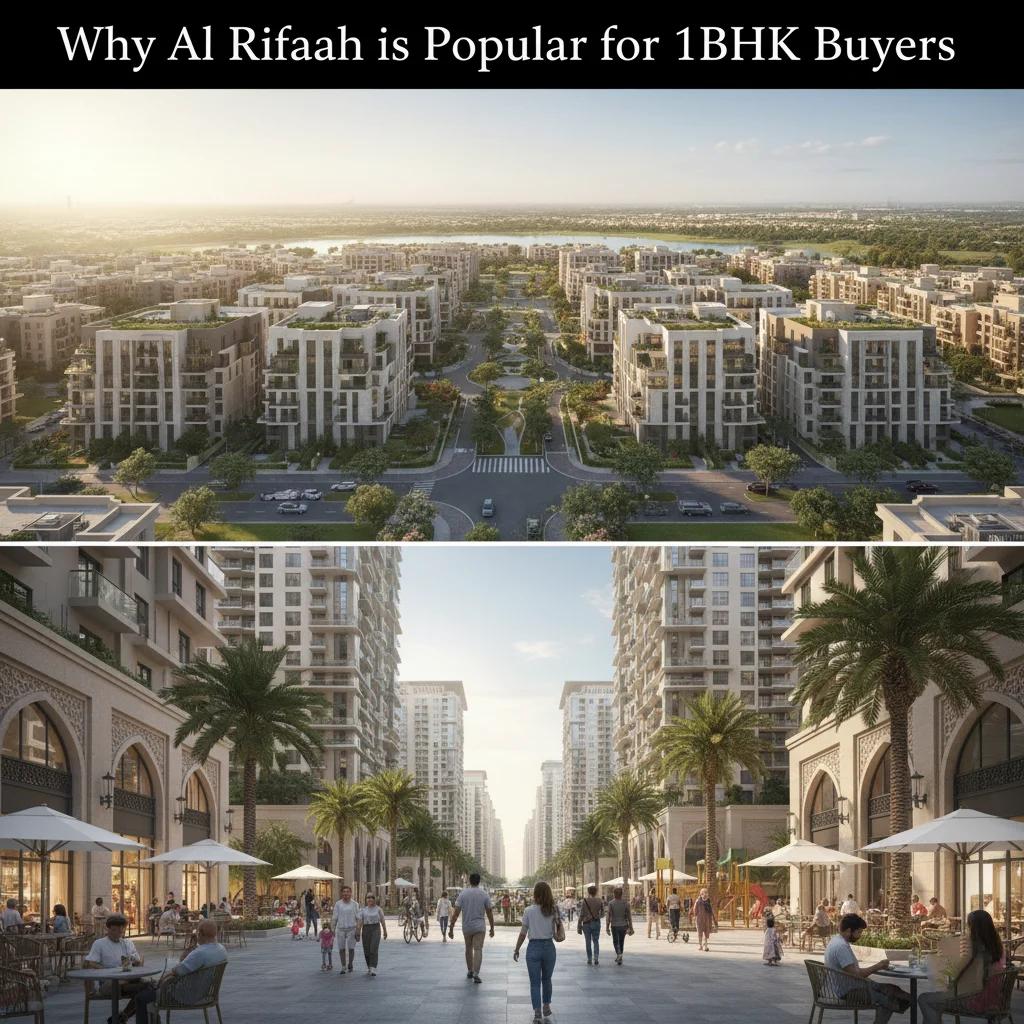
Why Al Rifaah is Popular for 1BHK Buyers
Sharjah’s real estate market isn’t just growing—it’s transforming. One emerging trend is the rising popularity of 1BHK apartments in neighborhoods like Al Rifaah. This shift matters not just for buyers, but for anyone watching how affordability, lifestyle, and policy intersect in rapidly developing cities. Here’s what’s happening, why it’s important, what to learn from it—and what this could mean going forward.
The Real Estate Landscape in Sharjah Is Booming
Sharjah’s property market has seen dramatic growth recently, setting the stage for more demand in affordable housing, including 1BHKs in areas like Al Rifaah. In the first half of 2025, total real estate transactions in Sharjah reached AED 27 billion—an increase of about 48% compared to the same period the previous year. Residential properties form a large share of that growth. When transaction volume and investor activity surge so sharply, sellers and developers respond by building and marketing properties that meet prevailing demand. For many buyers, especially those wanting smaller units or just starting out, 1BHK apartments become attractive. As demand for these smaller units increases, areas that are affordable and accessible (like Al Rifaah) see rising interest.
Affordability vs. Value: 1BHKs Hit a Sweet Spot
One of the key reasons 1BHK apartments are gaining popularity is that they offer a balance of affordability, lifestyle, and return—especially in newly developing or less premium neighborhoods. Sharjah’s average property prices remain significantly lower than comparable units in Dubai or prime areas, but with rising rental demand. Rentals for 1BHK flats in Sharjah have seen increases between 16% and 57% over the past year. Moreover, listings show freehold and leasehold 1-bedroom apartments at more accessible entry points than many 2- or 3-bedroom units. Buyers who want their own place but not huge space are sensitive to both purchase price and ongoing costs (maintenance, utility, service charges). 1BHKs reduce those costs. In an environment where property values are rising but haven’t “gone through the roof,” these smaller units offer a way to own property without overstretching financially. The appeal is both to end-user buyers (single people, small households) and investors who want steady rental income with lower capital outlay.
Policies, Freehold Zones & Investor Confidence Are Improving
Regulatory reforms and policy changes in Sharjah are making it easier and safer to buy property, which raises demand particularly for smaller units once ownership becomes more accessible. Sharjah has been opening up more freehold zones—areas where non-GCC nationals can own property with full ownership rights. Also, mortgage and financing options have expanded, and investor numbers from various nationalities are rising. When ownership rights are clearer, and financing is available, more people feel confident buying rather than renting. Freehold ownership removes some uncertainty about long-term value. This confidence helps smaller units such as 1BHKs become viable options—buyers don’t worry that their investment might be more restricted or less liquid.
Lifestyle & Location Trade-Offs are Changing Priorities
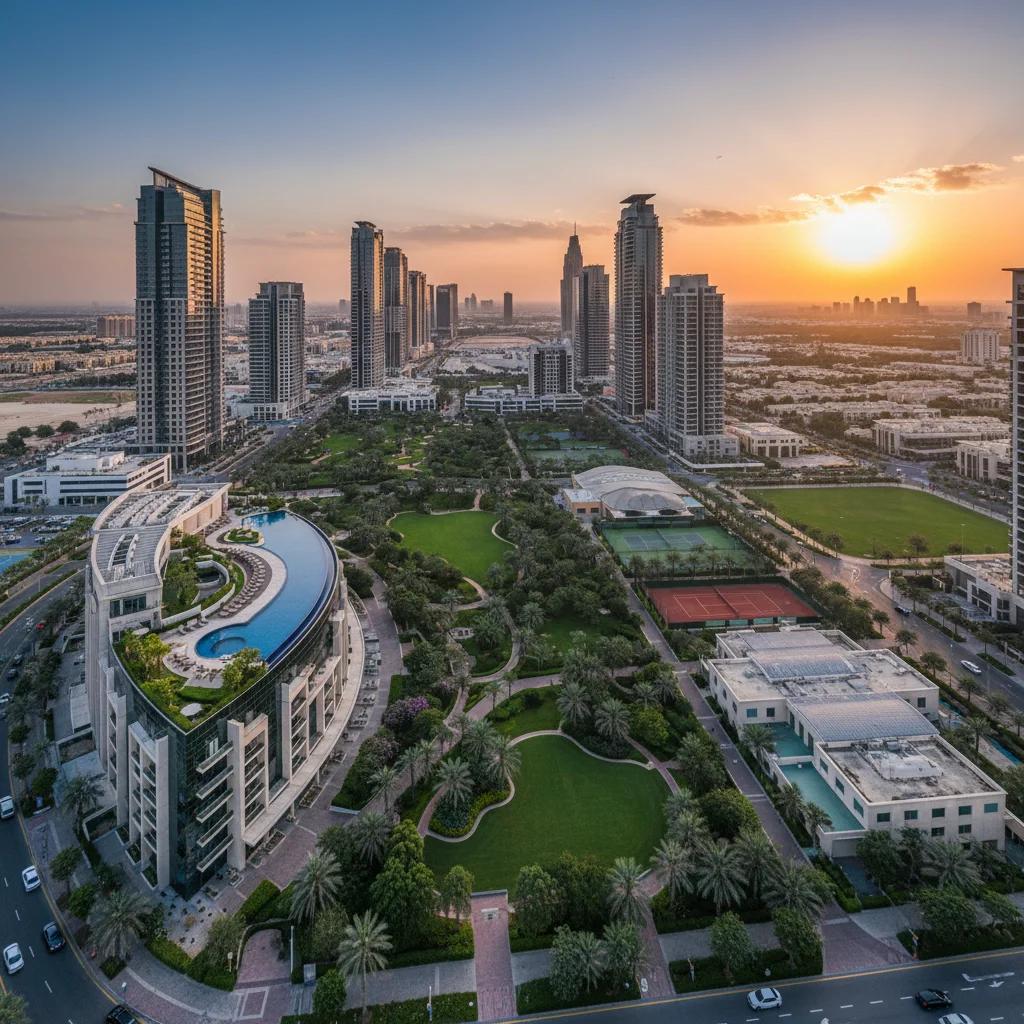
More people (especially younger buyers, singles, small families) are willing to trade off being in the city center for quieter, more scenic, more livable neighborhoods—if those places are accessible—and Al Rifaah fits that shift. Mentioned in local market reports are growing demand from people commuting into Dubai or moving out from overheated central areas, in search of more affordable rent or purchase options with decent amenities. Sharjah neighborhoods with sea views, coastal proximity, and modern infrastructure are increasingly searched and bought. Also, the record transaction activity is spread over many areas across Sharjah (114 or more distinct areas in monthly reports), showing demand is not just in already-tight zones. In many fast-growing cities, after periods of price-escalation, people start to re-evaluate their priorities: space, peace, views, environmental quality, lower living costs. If public transport, roads, schools, shops are good enough in the less central district, the attraction becomes strong. Al Rifaah, especially with sea/coastal adjacency and decent access, offers that trade-off.
Why This Matters – Bigger Implications
The rising popularity of 1BHKs in areas like Al Rifaah signals more than just a market trend—it has wider implications for urban planning, housing policy, and investment strategy. With Sharjah’s real estate transactions surging (e.g. AED 27 billion in H1 2025) and monthly highs (e.g. AED 7.5 billion in July) being reported across many smaller developments, there is visible pressure to deliver housing at scale and with quality. Market analysts are pointing out that “right pricing” strategy is helping keep demand steady without overheating. For city planners and regulators, this trend means there will be demand not just for luxury apartments or villas, but compact units, smaller developments, and infrastructure in neighborhoods further away from city cores. Housing policy needs to ensure amenities, connectivity, schools, utilities keep pace. For investors, it’s a sign that smaller units in up-and-coming areas may offer solid returns, lower risk, and quicker liquidity.
What to Watch Out For (Challenges & Risks)
While the trend is promising, there are also risks and caveats to ensure that the rising popularity is sustainable and beneficial. Reports show that even though prices are rising, they “haven’t gone through the roof” yet, meaning the market is still considered “buyers’ market.” But rapid demand can lead to supply shortages, over-pricing, or corners being cut in quality. Also, areas further from major roads or lacking amenities may suffer from lower growth or lower desirability despite being cheaper. If infrastructure doesn’t keep up (roads, public transport, shops, schools), then buyers may regret low upfront costs once commuting or lifestyle costs increase. Also, speculative development (many 1BHKs built without sufficient quality control or demand) could lead to oversupply, stagnant prices, or slow rentals.
Lessons for Buyers, Investors & Local Government
The rise of 1BHK demand in Al Rifaah offers concrete lessons for all stakeholders (buyers, investors, policymakers) in shaping their decisions. Market performance data shows high transaction volumes, rising buyer confidence, increasing demand for smaller, well-priced units. The fact that so many areas are recording high transaction counts (in the thousands monthly) indicates strong grassroots interest. For buyers: smaller homes may be more affordable upfront and easier to maintain, and might offer decent rental yields. For investors: smaller units in areas just being developed or seeing infrastructure improvements might yield more stable returns and lower risk. For local government / urban planners: ensuring infrastructure, zoning, amenities, sustainability and regulations keep pace is essential to avoid negative outcomes (traffic congestion, inequity, poorly serviced neighborhoods).
What Makes Al Rifaah Special (in the Context of 1BHK Popularity)
There are a few features that likely make Al Rifaah a particularly strong candidate for this rising 1BHK demand:
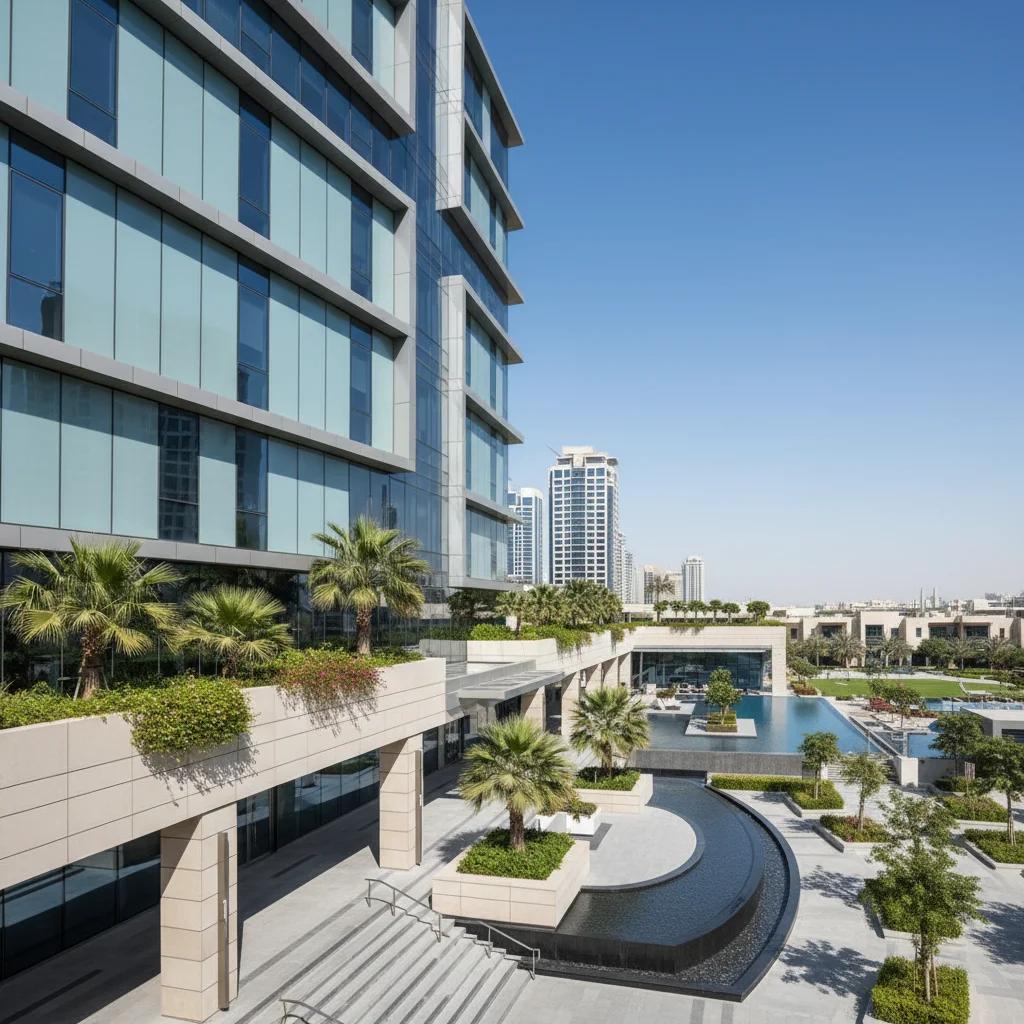
- Coastal / sea view potential and leisure appeal: Buyers often pay more for views or proximity to the water; even having partial sea view or being near the coast adds prestige.
- Balanced accessibility: Not in the crowded center, yet not completely remote; roads and connections to the rest of Sharjah and possibly commuting routes to Dubai make it viable.
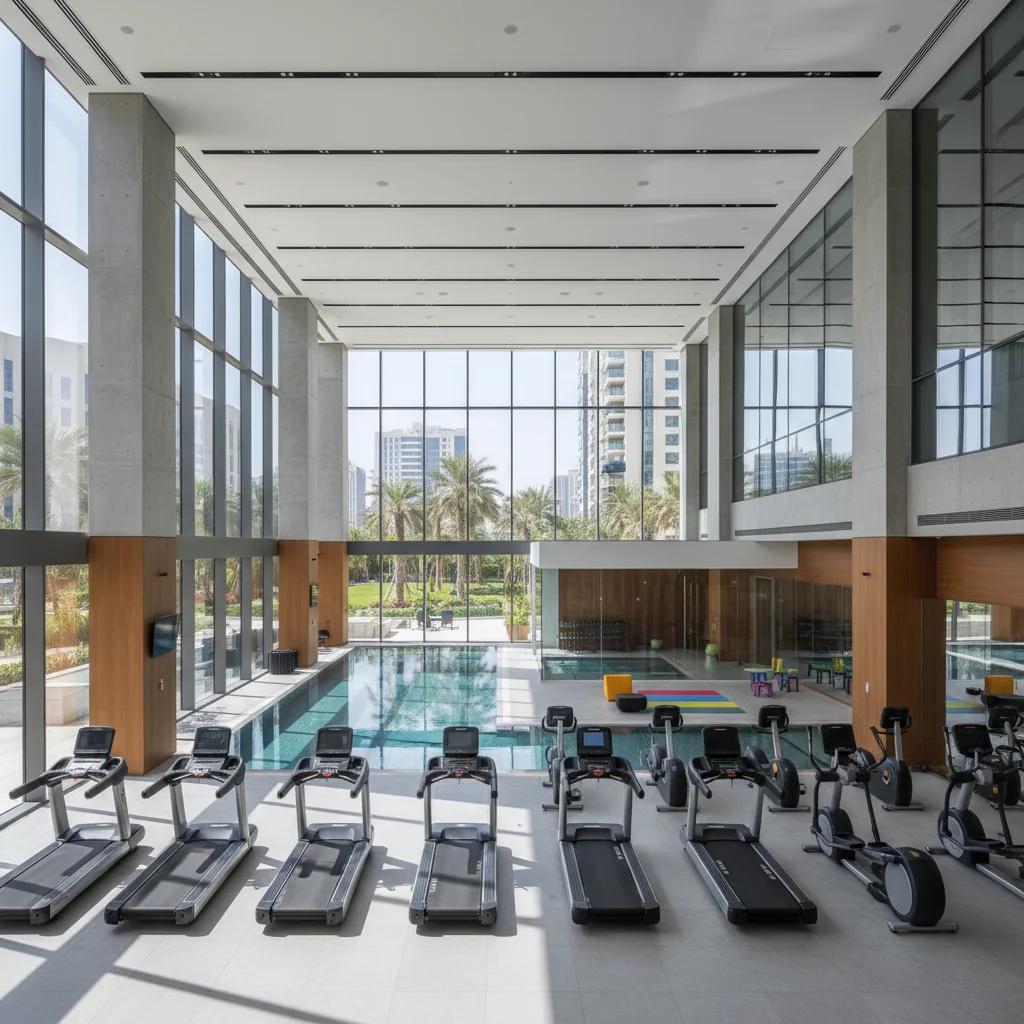
- Lifestyle amenities: Local shops, markets, green spaces, perhaps restaurants that are developing to serve new residents. These help make 1BHK living attractive.
- Affordability relative to more mature districts: Because Al Rifaah is less “established” than some core areas, unit prices are lower, allowing more people to enter the market.
Conclusion
The trend of rising demand for 1BHK apartments in Al Rifaah is important because it reflects deeper shifts in how people want to live, how policy is evolving, and how markets adjust to both affordability and desire for quality. It’s a signal that housing demand is becoming more nuanced: luxury is no longer the top goal for everyone. Instead, people want a home that is affordable, convenient, with lifestyle perks, and in neighborhoods with potential—not just prestige. the rise of 1BHK demand in Al Rifaah is a story of shifting priorities, smart policy, and emerging market opportunity. If handled intelligently, it’s a win-win—for buyers, investors, and the broader city.