

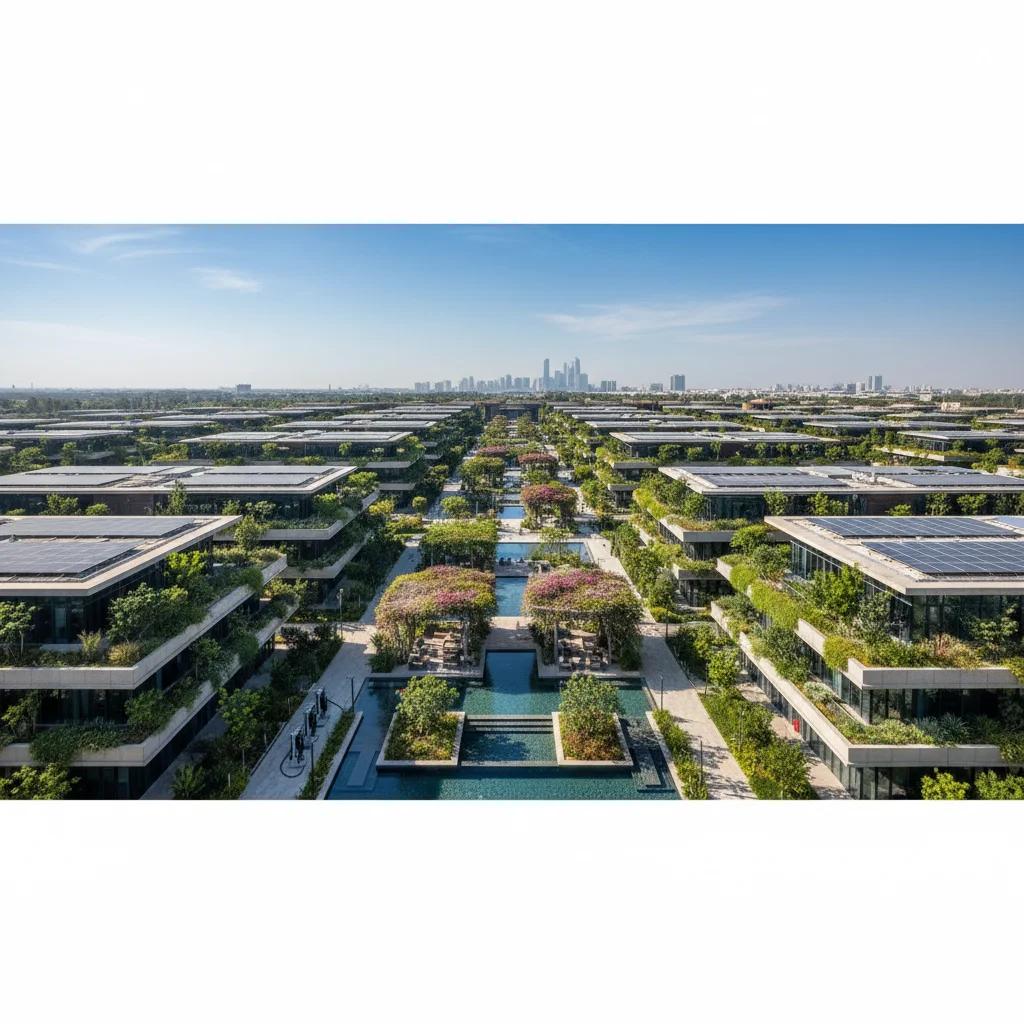
Sustainable City in UAE – A Comprehensive Guide
- Sustainable City: Introduction to UAE’s Green Urban Vision
- Environmental Technologies Driving Clean Energy in Smart Urban Areas
- Social and Economic Benefits of Eco-Friendly Urban Living
- Designing Urban Infrastructure for Climate Resilience and Sustainability
- Case Studies: Leading UAE Sustainable City Projects and Models
- Future Outlook: UAE’s Strategies for Expanding Sustainable Urban Development
- FAQs
Explore the sustainable city concept in the UAE, highlighting eco-friendly initiatives, projects, and benefits for residents. Learn how the UAE is paving the way for smart urban living.
Sustainable City: Introduction to UAE’s Green Urban Vision
The vision of a sustainable city in the UAE is not merely a trend but a strategic pathway set against the backdrop of the nation's commitment to environmental stewardship. Various projects spearheaded by the government emphasize energy efficiency and the use of renewable resources, laying a foundation for responsible urban development.
In recent years, initiatives such as the Dubai Clean Energy Strategy 2050 and the Abu Dhabi Climate Action Plan have demonstrated the UAE's dedication to becoming a global leader in sustainability. These frameworks guide the development of urban areas that prioritize ecological balance and efficient resource management.
Urban planning within this context focuses on integrating green spaces, promoting public transportation, and utilizing technology to reduce the environmental impact. This approach not only enhances the quality of life for residents but also fosters a communal sense of responsibility towards conservation and sustainable practices.
Projects like Masdar City are prime examples of the UAE's ambitious plan to construct urban environments that embody sustainable living. By harnessing clean energy sources and emphasizing walkability, these developments illustrate how innovative architecture can harmonize with nature.
For those interested in exploring properties and developments aligning with this eco-conscious vision, browse available properties for sale. Understanding these initiatives provides valuable insight into how the UAE is reshaping urban landscapes for a sustainable future.
Environmental Technologies Driving Clean Energy in Smart Urban Areas
Innovative environmental technologies play a crucial role in achieving the goals of a sustainable city, particularly within the UAE's smart urban projects. These technologies are designed to minimize ecological footprints while enhancing the quality of life for residents.
Solar power integration is at the forefront of these efforts. Many developments utilize photovoltaic systems to harness solar energy, reducing dependency on fossil fuels and providing clean electricity to residential and commercial spaces. This shift not only lowers energy costs but also contributes to a significant reduction in greenhouse gas emissions.
Water recycling systems are another essential feature in these urban environments. By implementing advanced treatment processes, the UAE recycles wastewater for irrigation and non-potable uses, promoting sustainable water management practices. This approach is particularly vital in arid regions, where water scarcity is a pressing concern.
Air purification methods contribute significantly to improving air quality within urban settings. Innovative technologies filter out pollutants and particulates, ensuring cleaner air for residents. These systems are often integrated into public spaces, enhancing the overall living experience.
For further insights on smart sustainable cities in the UAE, you can explore additional resources available on official documentation. This will provide a deeper understanding of how these technologies are being implemented.
The commitment to integrating such technologies forms the backbone of sustainable urban planning in the UAE, setting an example for future communities striving for environmental responsibility.
Social and Economic Benefits of Eco-Friendly Urban Living
The transition towards a sustainable city model positively impacts urban living by fostering community well-being and reducing environmental strain. These eco-conscious developments create spaces that enhance the quality of life for residents. In such neighborhoods, communal areas and green spaces encourage social interaction, promoting a sense of belonging among residents.
Pollution reduction is a significant advantage offered by innovative urban planning aimed at sustainability. Features such as energy-efficient buildings and improved public transit diminish reliance on vehicles, thus lowering emissions. This contributes to cleaner air and a healthier environment, which is particularly important in urban areas where pollution levels are often higher.
The economic impacts of developing eco-friendly urban centers are profound. The growth of green jobs in sectors such as renewable energy, waste management, and sustainable agriculture shows how these cities stimulate job creation and economic diversification. As companies pivot towards greener practices, the demand for skilled workers in these fields will continue to rise, providing local employment opportunities.
Sustainable urban living also fosters sustainable growth and development. By prioritizing resources that support efficiency and resilience, urban areas are more equipped to adapt to future challenges, such as climate change. As these communities progress, they become models for sustainable living, encouraging other regions to adopt similar practices.
Living in a the property not only enhances the quality of life but also sets a foundation for long-term prosperity. The interconnected benefits of social engagement, reduced pollution, and economic advancement create environments where residents can thrive. Through these eco-friendly practices, the UAE is paving the way for a sustainable future.
Designing Urban Infrastructure for Climate Resilience and Sustainability
Urban infrastructure in the UAE is undergoing significant transformation as planners prioritize climate resilience and sustainability. The design principles focus on creating a sustainable city that can adapt to environmental challenges. This involves rigorous building height regulations to prevent overheating and wind tunnel effects that can arise from improperly aligned structures.
Green corridors are being integrated into urban designs, promoting biodiversity and providing cooler microclimates within cities. These corridors not only enhance aesthetic appeal but also serve vital ecological functions, connecting different natural habitats and fostering wildlife. The emphasis on these green spaces is pivotal for improving air quality and enhancing urban livability.
Sustainable transport options are essential in strengthening climate adaptability in urban areas. Planners are focusing on expanding public transport networks and promoting non-motorized transport, such as cycling and walking. This shift reduces carbon emissions and supports the development of compact, walkable communities that reduce the need for reliance on cars.
The integration of renewable energy sources into the urban fabric is another critical element. Solar panels on rooftops and energy-efficient designs help minimize resource consumption. Educational initiatives are also being implemented to inform residents about sustainable practices and encourage community involvement in local environmental initiatives.
The approach that UAE urban planners are adopting marks a significant commitment to addressing the impacts of climate change. By focusing on infrastructure that prioritizes climate resilience, they are paving the way for a future where the the property concept becomes a reality, ensuring that cities are both livable and environmentally friendly.
Case Studies: Leading UAE Sustainable City Projects and Models
The UAE is setting benchmarks in urban planning with its focus on sustainability, particularly in its leading sustainable city initiatives. Projects like sustainable city, Masdar City, and the Dubai Green Spine exemplify this commitment by integrating eco-friendly practices within urban settings.
Masdar City, located near Abu Dhabi, serves as a global icon of sustainable urban design. It operates on renewable energy sources, promoting a zero-carbon environment. The project emphasizes sustainable transportation and community engagement, showcasing how urban development can meet ecological needs.
the property in Dubai is another flagship project that redefines eco-friendly living. This development incorporates various green technologies, including solar energy and waste recycling systems. Apartments are designed to maximize energy efficiency, with many featuring vertical gardens contributing to biodiversity.
The Dubai Green Spine is an innovative initiative aimed at enhancing green spaces in urban areas. It includes parks and pathways that facilitate pedestrian movement while promoting biodiversity. This model highlights the importance of integrating nature into urban environments, encouraging a healthier lifestyle for residents.
Together, these projects illustrate how urban planning in the UAE is evolving to embrace sustainable principles. They not only address local environmental challenges but also serve as models for cities worldwide looking to foster sustainable living.
Future Outlook: UAE’s Strategies for Expanding Sustainable Urban Development
Government initiatives play a crucial role in establishing a sustainable city framework across the UAE. Major strategies include urban master plans that outline key objectives for sustainability, including energy efficiency and waste reduction.
The UAE government has prioritized environmental laws and regulations that encourage sustainable practices. For instance, guidelines are in place to limit carbon emissions, promote renewable energy usage, and enforce standards on building materials to reduce ecological footprints.
In urban development, the focus extends to improving public transportation networks to minimize reliance on personal vehicles. Expanding public transport options supports commuting without high emissions, paving the way for increased community engagement in green initiatives.
The ambitions for new the property projects seek to enhance quality of life while addressing pressing environmental issues. These developments often feature parks, green spaces, and community gardens that foster environmental awareness and community interaction.
The establishment of sustainable urban centers in the UAE will not only advance ecological goals but also drive economic growth. Investments in green technologies and infrastructure create job opportunities and attract businesses focused on sustainable innovations.
The UAE's commitment to creating a sustainable city is evident through various innovative projects. From clean energy initiatives to climate-resilient infrastructure, these developments shape a brighter urban future. Residents can look forward to economic and social benefits enhanced by eco-friendly living. Explore more insights and properties that support sustainable lifestyles with Skyloov.


